

Converged
One gateway for fixed and mobile access
Each subscriber keeps one virtual gateway (vGW), policy and service context across fiber, Wi-Fi and supported mobile access. Your 5G core keeps its existing functions.
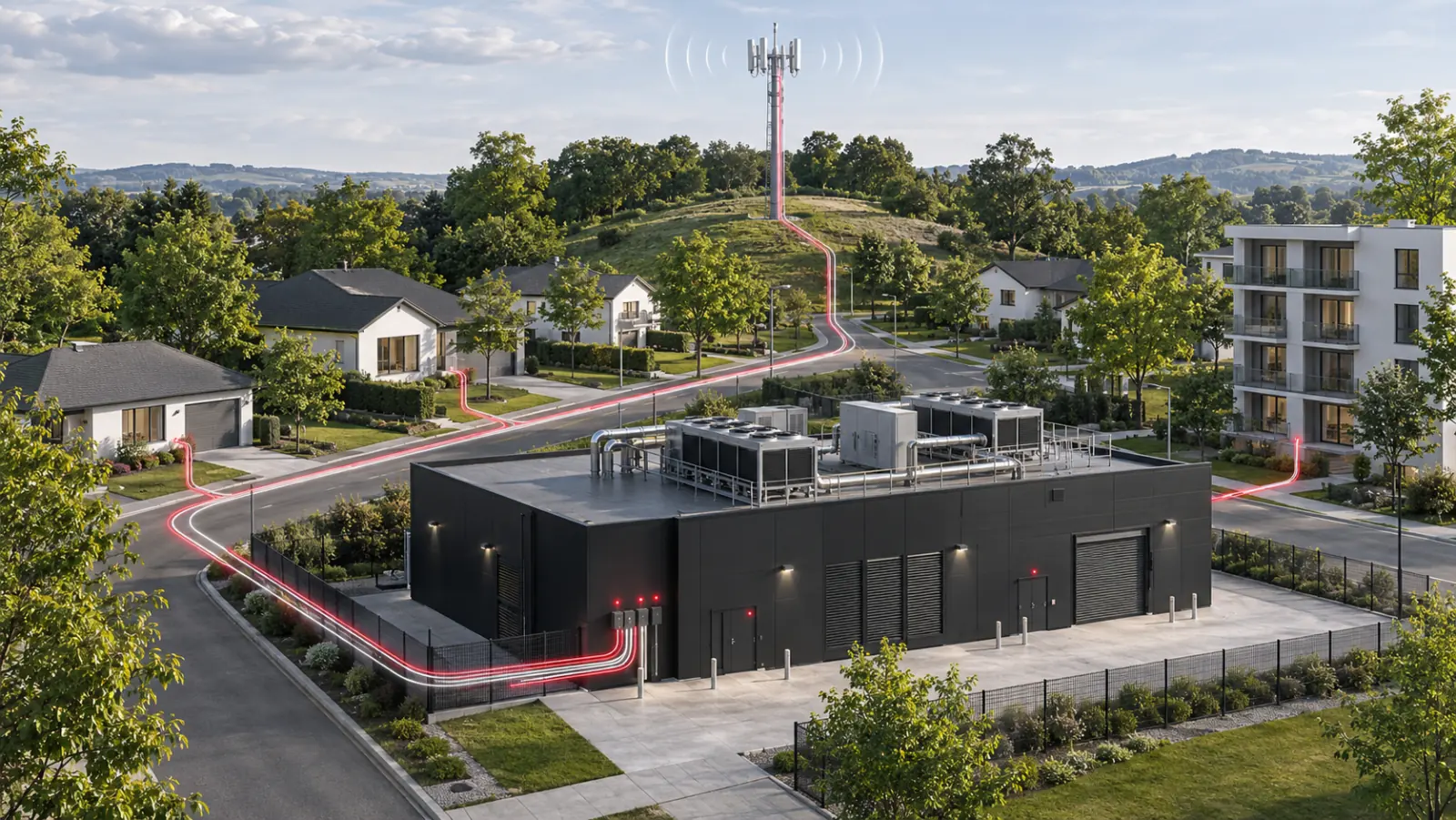
How traffic flows
-
Access admits the device
Property access points (APs) and supported home gateways connect household devices. Passpoint Wi-Fi and supported SIM-based cellular admit phones on the move.
-
Fixed traffic tunnels to a concentrator
A MaxLinear SoC AP or switch, or a supported home gateway, carries the subscriber’s wired and Wi-Fi traffic in a software-defined access network (SDAN) tunnel over any IP underlay.
-
Mobile sessions keep their core
Supported mobile sessions pass through the carrier’s 5G core, which keeps session anchoring, charging and lawful intercept.
-
One vGW holds the policy
Traffic steering connects each access path to the subscriber’s vGW. Fixed traffic passes through its firewall, NAT and bandwidth policy; supported mobile access reaches the same vGW and policy through operator integration.
-
Traffic reaches its destination
Fixed traffic exits on the vGW’s public IP wherever the vGW runs, including at the property or nearest edge with local breakout. Mobile sessions stay anchored in the 5G core.
What runs where
| Component | Where it runs | What it does |
|---|---|---|
| Initiator | Homes, units and common areas | A MaxLinear SoC AP, switch or supported home gateway starts the subscriber’s SDAN tunnel. |
| Underlay | The carrier’s IP access network | Any IP underlay, from PON or DOCSIS to satellite, carries the overlay. |
| 5G core | The carrier’s mobile network | Keeps session anchoring, charging and lawful intercept. |
| Concentrator | A property, or a regional or metro data center | An NVIDIA BlueField-3 DPU terminates tunnels and forwards traffic through each vGW. |
| vGW | The concentrator’s DPU server | One per subscriber across supported fixed and mobile access, with its own policy and public IP. |
| rXg controller | x86-64 servers on site or regionally | Directs initiators and concentrators and handles policy and billing. |
| Fleet Manager | A central rXg or high-availability pair | Applies templates and schedules upgrades across sites. |
| AI diagnostics | NVIDIA Blackwell GPUs on the operator’s premises | Interprets AP tests and DPU telemetry, off the forwarding path. |
| Breakout | Concentrator site, property or nearest edge | Fixed traffic exits here. Mobile sessions stay anchored in the 5G core. |
When to choose it

-
You run fixed and mobile access
With supported mobile access, authorized phones reach home files, and staff reach authorized branch services on the move.
-
Your 5G core stays as it is
Approved mobile sessions reach permitted services through your mobile core. With National Passpoint, a visitor connects over Wi-Fi. An existing home gateway tunnels that traffic to a metro concentrator that acts as the visitor’s virtual broadband network gateway.
-
People move between Wi-Fi and cellular
Campus rules follow students, and hotel staff keep hotel services, as phones move between Passpoint Wi-Fi and supported cellular.
Resilience
Fixed-path resilience is engineered per site.
Concentrators
Failover depends on placement and recovery design. The capacity model’s 75% ceiling leaves headroom.
Uplinks
Where concentrators run at a property, two dedicated Internet access uplinks provide link failover and separately engineered metro routes add geographic resilience.
Control
Fleet Manager runs on one rXg or a symmetric pair for high availability.
Modeled capacity
Sizing
In the national capacity model, a cluster of 16 DPUs serves 96,000 subscribers at the 75% ceiling.
If you host vGWs regionally, see the regional server example.
What your pilot proves
We mark each element, including each operator integration, as supported, assumed or awaiting validation, then test in our lab and one market.
How pilots work-
One context on every path
A test subscriber keeps one vGW and policy across fiber, Wi-Fi and each supported mobile attachment.
-
Every tunnel path checked
Each initiator-to-concentrator path gets an MTU survey and a NAT audit. Paths through NAT or CGNAT use VXLAN.
-
Agreed failure tests
Failure tests and acceptance criteria are agreed before we build. You decide whether to roll out.
Other designs
Plan a converged pilot
We map your fixed and mobile access paths and deliver a dated, versioned reference design.