

Centralized
One regional pool, many properties
Smaller sites share NVIDIA BlueField-3 DPU concentrators in a regional data center. Initiators at each property tunnel tenant traffic there over the existing IP access network.
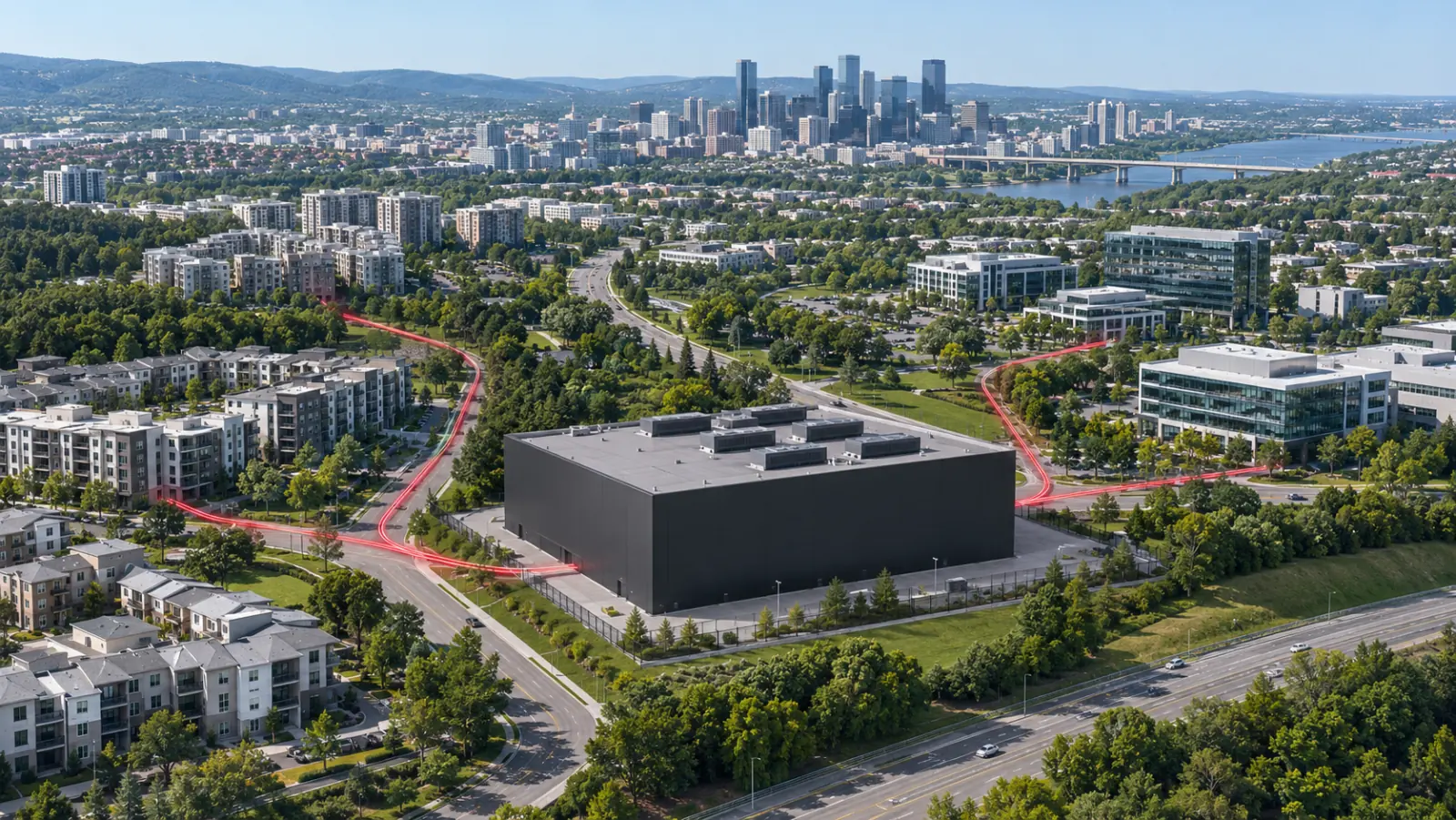
How traffic flows
-
A device joins an initiator
A phone or laptop connects to a MaxLinear gateway, access point (AP) or other edge device.
-
The initiator opens the overlay
Tenants share one software-defined access network (SDAN) overlay. In a VXLAN deployment, each keeps its own VXLAN network identifier (VNI).
-
The access network carries it
Any IP underlay works, from PON or DOCSIS to satellite.
-
A regional concentrator ends it
A BlueField-3 DPU in the regional data center decapsulates the traffic.
-
The gateway applies policy
Each tenant’s virtual gateway (vGW) has its own firewall, NAT, bandwidth policy and public IP.
-
Traffic exits in the region
Traffic exits at the regional data center where the vGW runs. For local breakout, place the vGW at the property or the nearest edge.
What runs where
| Component | Where it runs | What it does |
|---|---|---|
| Initiator | Each property or home | Originates the overlay and carries each tenant’s traffic separately. Tenant identity stays separate from the physical device. |
| IP underlay | Property to region | Carries the overlay. Its NAT behavior and MTU shape the choice of GRE or VXLAN. |
| Concentrator | Regional data center | NVIDIA BlueField-3 DPUs terminate tunnels from many properties. |
| vGW | On the concentrator, one per tenant | Gives each tenant its own firewall, NAT, bandwidth policy and public IP. |
| rXg controller | Regional data center | Directs initiators and concentrators. Handles policy and billing. |
| Fleet Manager | A central site, on one rXg or a pair | Applies templates, schedules upgrades and keeps site backups. |
| AI diagnostics | NVIDIA Blackwell GPUs on the operator’s premises | Interprets AP tests and DPU telemetry, off the forwarding path. |
| Internet breakout | Regional data center | Tenant traffic exits after its vGW. |
When to choose it
Many smaller sites
Select-service hotels, smaller buildings and small businesses in a metro can share a regional pool. Towers, campuses and flagship hotels can still run concentrators on site.
Your existing access network
Gateways connect through the IP access network, so one regional data center can serve apartments and single-family homes. Transit stations can share regional concentrators.
Resilience
Failover depends on cluster placement and recovery design, which we plan from your subscriber target.
Headroom in every DPU
The model plans each DPU to a 75% operating ceiling, which leaves operating headroom.
Paths engineered per site
Separately engineered routes can reach distinct metros where a property requires it.
High availability for Fleet Manager
Fleet Manager runs on one rXg or a symmetric pair for high availability, with encrypted backups for recovery.
Modeled capacity
Sizing
In one regional design, four NVIDIA DPU servers host tenant forwarding and vGWs. A redundant GPU pair runs diagnostics.
The model assumes 8,000 subscribers per DPU at full load, or 6,000 at the 75% ceiling. Sixteen DPUs form one logical cluster. The pool grows by adding DPUs or servers.
Mixed DPU and GPU configurations in the planned 2U, 4U and 5U servers need OEM validation.

What your pilot proves
We date and version the design, agree on acceptance criteria and mark each element supported, assumed or awaiting validation.
How pilots work-
Every path to the region
We survey MTU and check each path for NAT, then choose GRE or VXLAN per site.
-
One private path, one behind NAT
Piloting one of each tests overlay stability, DPU offload and Fleet Manager orchestration on both.
-
Failover and acceptance
Your test plan includes agreed failover tests. You decide on rollout from the acceptance report.
Other designs
Plan your regional pool
We plan placement, capacity and recovery from your subscriber target in a dated, versioned reference design.